

Quick answer
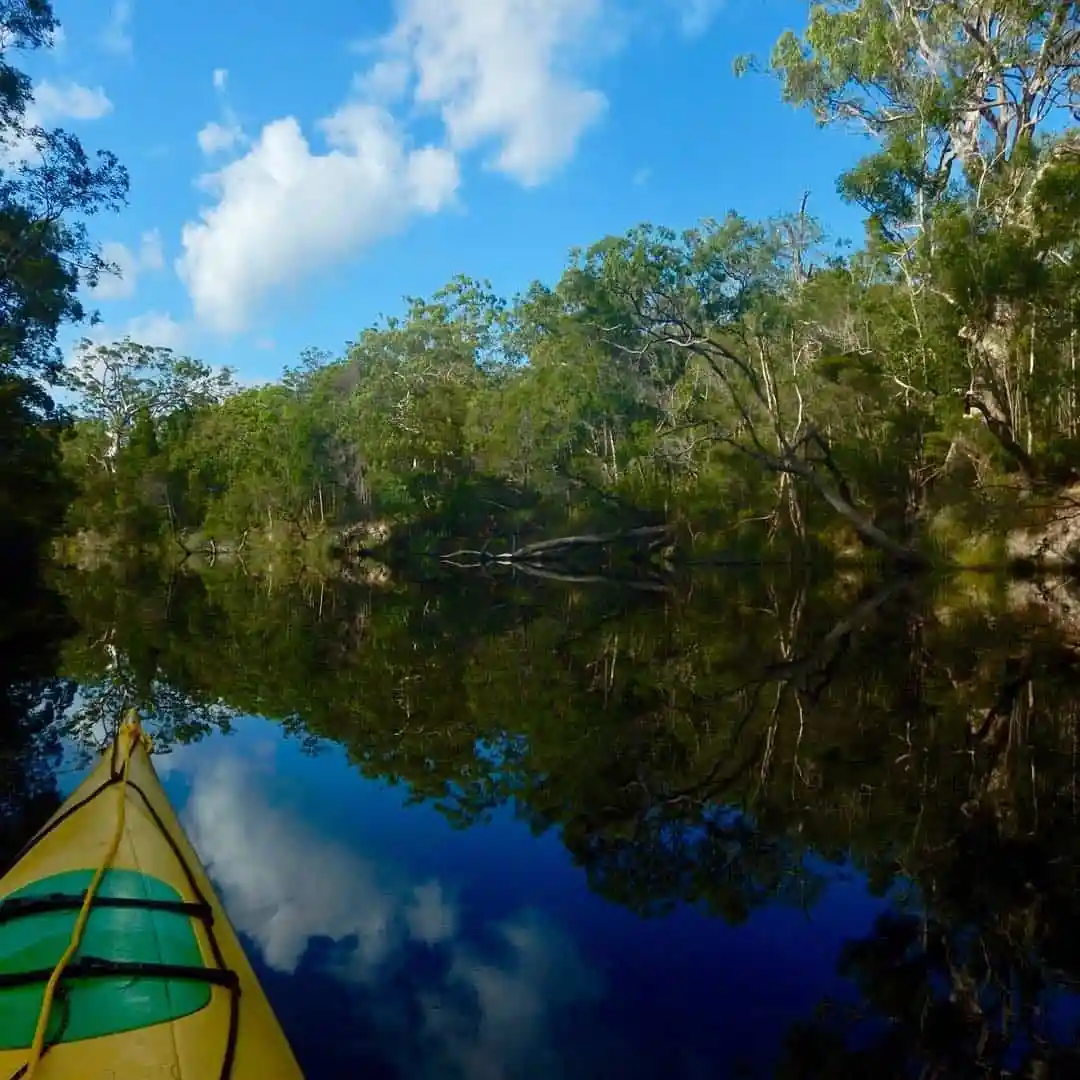
The highest-rated noosa everglades tour review feedback favours morning kayak departures between 6 AM and 9 AM, when glass-calm water produces the mirror reflections the system is known for. Half-day guided paddles consistently outperform motorboat tours in wildlife sightings and intimacy with the landscape. Operator choice matters: groups smaller than eight, naturalist-trained guides, and routes that reach the upper reaches of Kin Kin Creek or the Fig Tree Lake corridor deliver the best combination of scenery, ecology interpretation, and solitude.
The Noosa River system drains into a series of dark-water channels lined by paperbark forest, banksia heath, and stands of ancient Piccabeen palms—a remnant landscape that has remained largely unchanged for thousands of years. Access begins at Boreen Point, where Great Sandy National Park's waterways open to kayaks, canoes, and small motorboats. No entrance fee applies, but the labyrinth of creeks and blind channels makes unguided navigation difficult for first-time visitors. Tour operators fall into two camps: motorboat shuttles that cover distance quickly, and paddle-based trips that move slowly enough to observe water dragons on exposed roots, azure kingfishers hunting from low branches, and the subtle play of light through swamp mahogany canopies. Kayak-based noosa everglades tour review ratings skew higher across guest feedback platforms, with paddlers citing closer wildlife encounters and the absence of engine noise. The trade-off is exertion—upstream sections demand sustained effort against tidal flow—but most operators structure routes to leverage morning ebb tides for easier return legs. Route selection defines the quality of the journey. The lower stretches near Boreen Point see heavier traffic and fewer reflections once wind picks up mid-morning. Operators that push deeper into Kin Kin Creek or trace the Fig Tree Lake network encounter fewer vessels and better mirror-surface conditions. Guide expertise varies widely: the best naturalists identify bird calls, explain the role of tannin in water chemistry, and read tide windows to time the paddle for optimal current assistance. Operators who rush itineraries or prioritise throughput over interpretation consistently draw lower marks in visitor assessments. Weather and water conditions fluctuate seasonally. Autumn and winter months bring the most reliable calm-water mornings, while summer heat and afternoon thunderstorms compress the ideal window. Wind is the primary disruptor—anything above 15 kilometres per hour eliminates reflections and makes paddling upstream laborious. Tour operators who cancel or reschedule based on forecast conditions earn better long-term reviews than those who push through marginal weather to preserve bookings. Group size also correlates with satisfaction: parties of six or fewer allow for tighter formations, quieter conversation, and more responsive wildlife observation.
“Kayak-based itineraries that push into the upper creek systems deliver closer wildlife encounters and the mirror-surface reflections the Noosa Everglades are known for.”
Optimal Timing for Your Noosa Everglades Tour Review Experience
The best arrival window for your visit is 06:00–09:00, which provides optimal light for reflections and calm water conditions. While the area is accessible year-round, early morning remains the priority for those seeking stable water for navigation and photography.
Spring (September–November)
ModerateWarm and mild, 16°C–26°C
This period offers comfortable temperatures and active wildlife before the summer heat.
Autumn (March–May)
ModeratePleasant, 17°C–25°C
Lower humidity levels make for comfortable paddling and exploration throughout the day.
Weekday mornings
Low—
Mid-week visits during the early hours minimize human traffic and maximize water stillness.
Verdict: For the best experience, plan your visit during weekday mornings in April or October, ensuring you adhere to the 06:00–09:00 arrival window.
Planning Your Visit: A Noosa Everglades Tour Review Itinerary
This itinerary suits paddlers and guided tour participants exploring the Noosa Everglades by kayak or boat, typically spanning 4–6 hours on the water.
Launch at Boreen Point
Depart during the optimal window for calm water and mirror-like reflections. Most self-guided paddlers and commercial tours begin here.
Paddle Upper Noosa River
Navigate the tea-coloured waterways lined with paperbark and pandanus. The river narrows as you progress upstream, with minimal current.
Enter Everglades Proper
The channel opens into broader sections framed by dense banksia forest. Watch for turtles basking on submerged logs and white-bellied sea eagles overhead.
Reach Fig Tree Point
A common turnaround point approximately 8–10 km upstream, offering a shaded rest area. Round-trip from Boreen Point takes 4–5 hours for kayakers, 3–4 hours for motorized tours.
Return Paddle to Boreen Point
The downstream journey is faster with minimal effort required. Pack sun protection—canopy cover thins in sections.
Exit and Debrief
Rinse gear at the boat ramp and review the unique tannin-stained ecosystem you've navigated. Great Sandy National Park remains accessible for land-based walks if time permits.
Getting to Boreen Point for Your Noosa Everglades Tour Review
The Noosa Everglades are located within Great Sandy National Park, with Boreen Point serving as the primary land-based gateway. Visitors typically travel to this point by road before accessing the waterway by boat or kayak.
Drive via Eumundi Noosa Road and Lake Flat Road to Boreen Point
Access the Noosa Everglades via watercraft from Boreen Point jetties
Private transfer services from Noosa Heads to Boreen Point
Entrance Fees for Your Noosa Everglades Tour Review
Access to the Noosa Everglades is managed through the Great Sandy National Park. Entrance to the park itself is free, though expenses may arise if you choose to utilize commercial transport or guided services to navigate the waterways.
The entry fee to the park is 0 AUD, with total costs depending solely on whether you choose a self-guided trip or a commercial tour provider.
Opening Hours for a Noosa Everglades Tour Review
The Noosa Everglades are accessible throughout the week, allowing visitors to plan their visit at any time. The area remains open daily to accommodate various scheduling needs.
| Monday | 00:00–23:59 | |
|---|---|---|
| Tuesday | 00:00–23:59 | |
| Wednesday | 00:00–23:59 | |
| Thursday | 00:00–23:59 | |
| Friday | 00:00–23:59 | |
| Saturday | 00:00–23:59 | |
| Sunday | 00:00–23:59 |
Essential Tips for a Noosa Everglades Tour Review
Preparation ensures a respectful and comfortable experience while navigating the delicate ecosystem of the Noosa Everglades.
Sun Protection Strategy
Apply high-SPF sunscreen at least twenty minutes before boarding and wear a broad-brimmed hat. The reflection of the sun off the water significantly increases UV exposure compared to land-based activities.
Insect Awareness
Pack effective insect repellent containing DEET or Picaridin to manage mosquitoes and sandflies. These insects are most active near the water banks, particularly during dawn and dusk hours.
Hydration Management
Carry at least two liters of water per person in a reusable container. The physical exertion of paddling combined with the sub-tropical climate accelerates dehydration.
Wildlife Etiquette
Observe animals from a distance and avoid feeding them or making loud noises. Maintaining a quiet presence allows for better wildlife viewing and minimizes stress on the local fauna.
Leave No Trace
Carry out all personal waste, including biodegradable items like fruit peels. Keeping the waterway clean protects the water quality and maintains the habitat for native species.
Check availability
Frequently asked questions about noosa everglades tour review
Everything you need to know about noosa everglades tour review