

Quick answer
Swimming is permitted in most sections of the Noosa Everglades outside designated sanctuary zones, though the dark tannin-stained water, soft sediment riverbed, and lack of designated swimming areas make it uncommon. The water is not dangerous but stained tea-brown by organic matter from surrounding vegetation, limiting visibility to near zero. Most visitors choose to wade at access points like Kinaba or Elanda Point rather than swim in open channels, where submerged logs and soft mud create navigation challenges.
The Noosa Everglades carry roughly 450 million liters of tannin-stained water at any given time, a natural product of tea-tree and paperbark breakdown that gives the system its mirror-surface effect and its nickname as one of only two everglade systems on Earth. That tannin concentration is not harmful but renders underwater visibility effectively zero, which shifts the risk profile for swimmers in ways most expect only from murky urban waterways. The riverbed is soft organic sediment rather than sand or rock, and submerged timber from decades of natural fall lies across many channel sections, invisible from the surface. Can you swim in the Noosa Everglades? Technically yes, practically rarely. Queensland Parks and Wildlife Service permits swimming in the river system outside marked sanctuary zones, which protect breeding grounds for species like the threatened Mary River cod and sawfish nurseries near Harry's Hut. No designated swimming beaches exist within the park boundary, and the lack of shallow entry points or lifeguard presence means swimmers operate entirely at their own judgment. Most who enter the water do so briefly at boat-launch areas like Kinaba Information Centre or Elanda Point, where firm ground meets the channel edge and pontoon access allows controlled immersion. Water temperature holds steady between 18 and 26 degrees Celsius depending on season, and the tannin itself acts as a mild natural antiseptic, suppressing bacterial growth more effectively than clear freshwater systems. The real deterrent is psychological: stepping into water where you cannot see your own knees contradicts most recreational swimming instincts. Canoeists and kayakers occasionally trail hands or feet over the side during still-water crossings of Lake Cootharaba, where the everglade channels widen into open water and depth drops to three meters, but deliberate swimming remains uncommon even in summer months. The river mirrors paperbarks and reeds so cleanly that depth perception fails until you break the surface, and that disorientation matters more than any biological hazard the water presents. If you plan to enter the water for any reason, footwear with secure ankle straps prevents loss in the soft sediment, and a tethered flotation device compensates for the zero-visibility environment where gauging distance to shore becomes guesswork.
“The riverbed is soft organic sediment rather than sand or rock, and submerged timber from decades of natural fall lies across many channel sections, invisible from the surface.”
Can You Swim In The Noosa Everglades Safely?
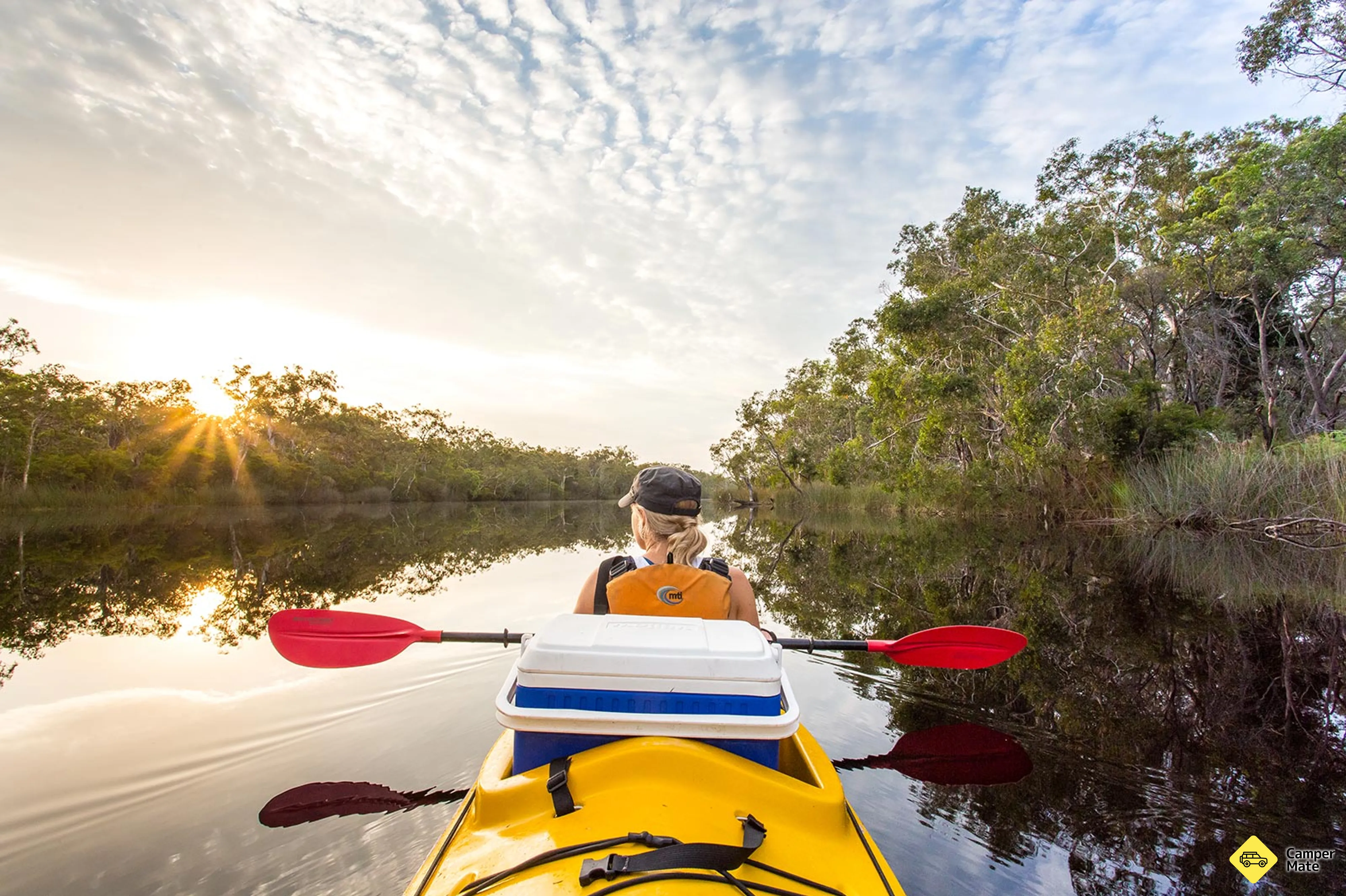
Swimming in the Noosa Everglades is technically possible but strongly discouraged due to dark tannin-stained water, submerged hazards, and fragile ecosystems. Most visitors choose kayaking or canoeing instead.
Do
- Stay in your vessel and paddle rather than swim
- Wear a life jacket if you enter the water
- Keep noise levels low to avoid disturbing wildlife
- Report any injuries or incidents to park rangers immediately
- Rinse off tannin staining with fresh water after contact
- Stay within marked waterways and designated access points
Don't
- Don't swim in areas with poor visibility or unknown depths
- Don't disturb sediment or aquatic vegetation while in the water
- Don't apply sunscreen or insect repellent immediately before entering water
- Don't assume the water is free of submerged logs or branches
- Don't leave your kayak or canoe unattended while swimming
- Don't swim alone or far from your launch point
How To Reach Locations If You Can Swim In The Noosa Everglades
The Noosa Everglades are located within the Great Sandy National Park, with primary access points situated at Boreen Point and Elanda Point, Queensland. Visitors typically rely on private vehicles to reach these remote areas as there is no direct public transport.
Follow Eenie Creek Rd and Lake Flat Rd to Boreen Point
Drive via Louis Bazzo Dr to reach Elanda Point
Access via Lake Cootharaba from Boreen Point jetty
Preparation Checklist For When You Can Swim In The Noosa Everglades
Pack the right gear to stay safe and comfortable while exploring the Great Sandy National Park's waterways.
-
Bring reef-safe sunscreen (SPF 50+) — The Everglades offer minimal shade and UV reflection off water intensifies exposure.
-
Pack 2–3 litres of drinking water per person — No potable water sources exist within the wilderness area.
-
Wear a wide-brimmed hat and UV swim shirt — Prolonged sun exposure on open water causes rapid sunburn and heat stress.
-
Carry a waterproof dry bag — Protects phones, keys, and valuables during kayaking or swimming activities.
-
Include a basic first-aid kit — Remote location means medical help can take 60+ minutes to reach you.
-
Bring insect repellent with DEET or picaridin — Mosquitoes and midges are active year-round, especially near still water.
Check availability
Frequently asked questions about can you swim in the noosa everglades
Everything you need to know about can you swim in the noosa everglades